Recognition of Life-Threatening Catastrophic Bleeding
Recognising life-threatening bleeding and the need for immediate action.

This addendum applies to the following qualifications:
This addendum should be read alongside the Wounds and Bleeding section in the books listed below.
Tourniquet use and wound packing techniques were introduced into First Aid at Work training in January 2026.
The First Aid Awarding Organisation Forum (FAAOF) is a UK body that brings together regulated first aid awarding organisations to align standards, share best practices, and maintain the quality and consistency of regulated first aid qualifications. First Aid Awards is a member of the FAAOF.
The First Aid Awarding Organisation Forum (FAAOF) has now agreed that this content should be included within Emergency First Aid at Work, Paediatric First Aid and Emergency Paediatric First Aid. To keep training consistent, our awarding body, First Aid Awards, has chosen to extend this content to Outdoor First Aid, Emergency Outdoor First Aid and Activity First Aid.
As at November 2026, the additional treatment techniques described in this addendum are included for knowledge only and do not form part of the assessment for the FAA qualifications listed above.
Haemostatic dressings require additional training before use. Reading this addendum does not provide that training.
Short refreshers supporting the bleeding-control guidance in this addendum.
Recognising life-threatening bleeding and the need for immediate action.
Improvised tourniquet guidance for life-threatening limb bleeding, where trained or directed by the emergency call handler.
Wound packing guidance, where trained. Haemostatic dressings require additional training before use.
Look for heavy or continuous bleeding, spurting blood, rapidly soaked clothing or dressings, pooling blood, a partially or completely severed limb, or heavy bleeding that continues despite firm direct pressure. Do not wait for signs of shock before acting.
Apply firm direct pressure and call 999/112 immediately. Ask a bystander to call while you control the bleeding. If alone, use your phone on speaker. Tell the call handler that the casualty has life-threatening bleeding and give your exact location.
Wound packing places dressing material inside an appropriate deep wound so that pressure reaches the bleeding source. It may be needed in areas such as the groin or armpit, where a limb tourniquet cannot be applied.
A haemostatic dressing contains material that helps blood clot and must be used with firm pressure. Haemostatic dressings require additional training before use.
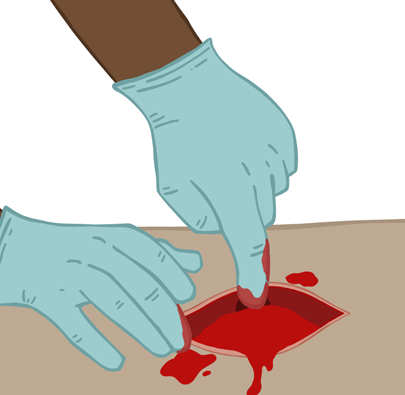
1. Expose the wound and identify where the bleeding is coming from.
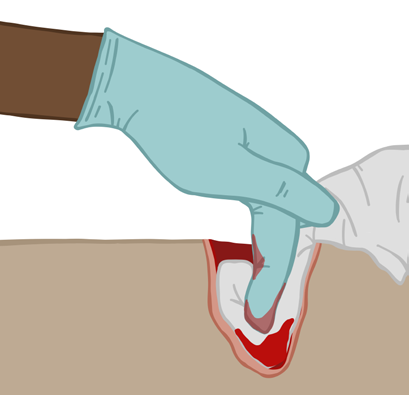
2. Press the dressing firmly against the bleeding source.
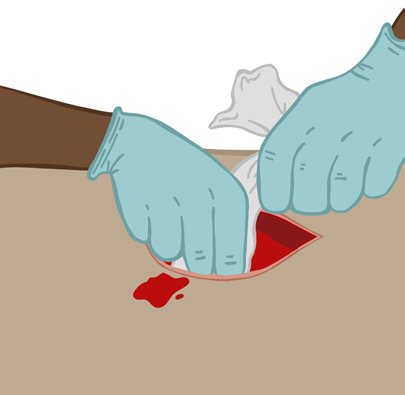
3. Continue feeding dressing into the wound, maintaining pressure until the cavity is firmly filled.
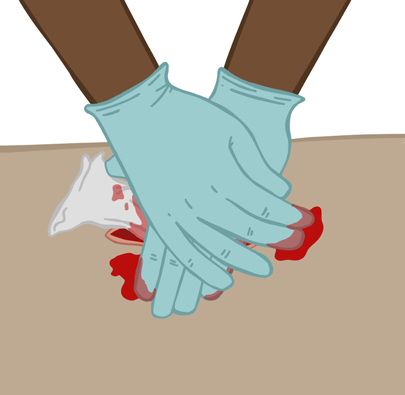
4. Apply sustained pressure over the packing. Follow the product instructions for the required pressure time.
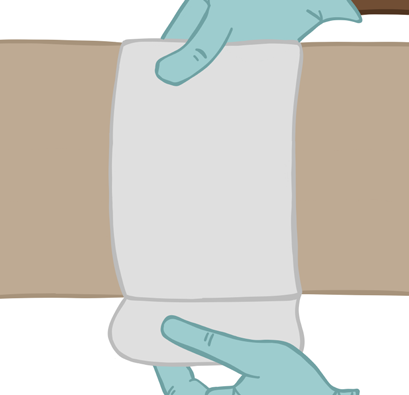
5. Once bleeding is controlled, secure a pressure dressing and continue monitoring.
Use suitable plain gauze as taught during training. Use haemostatic gauze only after additional training in its use.
Packing supports pressure; it does not replace it.
A tourniquet stops blood flow to an injured limb. Use one promptly for life-threatening bleeding from an arm or leg that direct pressure has not controlled. Use a purpose-made tourniquet as trained and follow its instructions.
If bleeding continues, ensure the first tourniquet is fully tightened. A second may be needed above the first, towards the body.
An improvised tourniquet may be needed when life-threatening bleeding from an arm or leg continues despite firm direct pressure and no purpose-made tourniquet is available.
Call 999/112 and use your phone on speaker. Apply an improvised tourniquet as trained or under the emergency call handler’s direction. Keep pressure on the wound while someone prepares the materials.
You will need strong fabric folded into a broad band at least 5 cm wide, such as a triangular bandage, and a strong, rigid rod to twist the band tight. The rod is called a windlass.
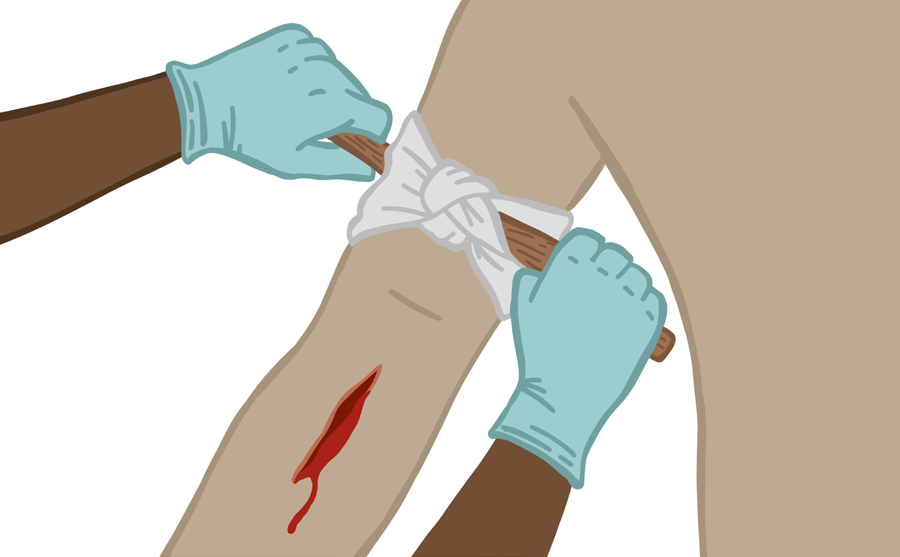
Do not use shoelaces, wire, cable ties or other narrow materials. Avoid fragile objects that could snap when twisted.
As at November 2026, this additional treatment content is for knowledge only and is not assessed within the FAA qualifications listed in this addendum.